What Is an HVAC Zoning System and Why It Makes Sense for Minnesota Homes

Updated: Apr 1
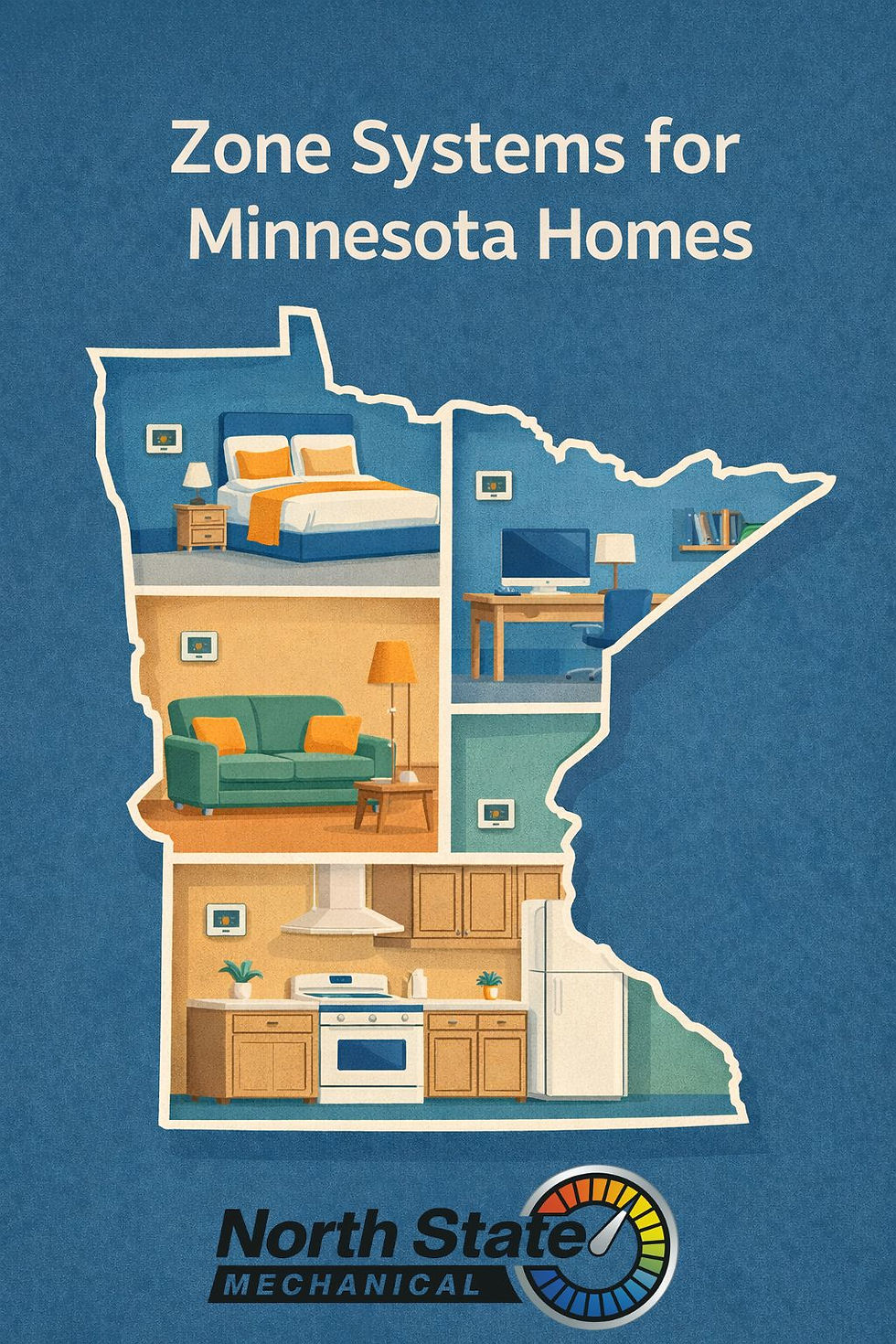
An HVAC zoning system allows you to heat or cool different parts of your home separately instead of using one thermostat for the whole house. Each zone has its own thermostat and uses dampers in the ductwork to send air only where it’s needed. For Minnesota homes, where winter temperatures can swing fast and summer heat can hit upstairs hard, zoning gives you better control and comfort year-round.
Many Minnesota homes deal with uneven temperatures. Upstairs rooms often feel colder in winter and hotter in summer, while basements stay cool all year. With an HVAC zoning system, you can warm up living spaces without overheating unused rooms. Instead of your system working harder to fix one problem area, zoning helps balance temperatures throughout the home more efficiently.

Zone systems also help reduce energy costs, which matters in a state where heating runs for much of the year. According to the U.S. Department of Energy, heating and cooling make up a large portion of household energy use. By only heating or cooling the areas being used, zoning reduces wasted energy — helping lower monthly utility bills during long Minnesota winters
.

Zoning works especially well in multi-level homes, homes with additions, finished basements, large windows, or rooms that face the sun. It’s also helpful when family members prefer different temperatures. Over time, zoning can reduce strain on your heating and cooling system by preventing it from running at full power all the time.
If certain rooms in your Minnesota home are never comfortable no matter how much you adjust the thermostat, a zone system may be worth considering. North State Mechanical can evaluate your home and help determine if zoning is a smart solution for your layout, comfort needs, and budget.

Sources
U.S. Department of Energy — Heating and Cooling Energy Use:
https://www.energy.gov/energysaver/heating-and-cooling
ENERGY STAR (U.S. EPA) — Home Comfort & Energy Efficiency Guidance: